
Sunroom additions
Full overview of how sunroom additions work in Upland - planning, permitting, and what to expect from start to finish.
Learn MoreVinyl sunrooms do not rust, rot, or need repainting - and in Upland, where summer heat tests every outdoor structure, that durability matters. We install vinyl sunrooms with the glazing and sealing needed for Inland Empire conditions.
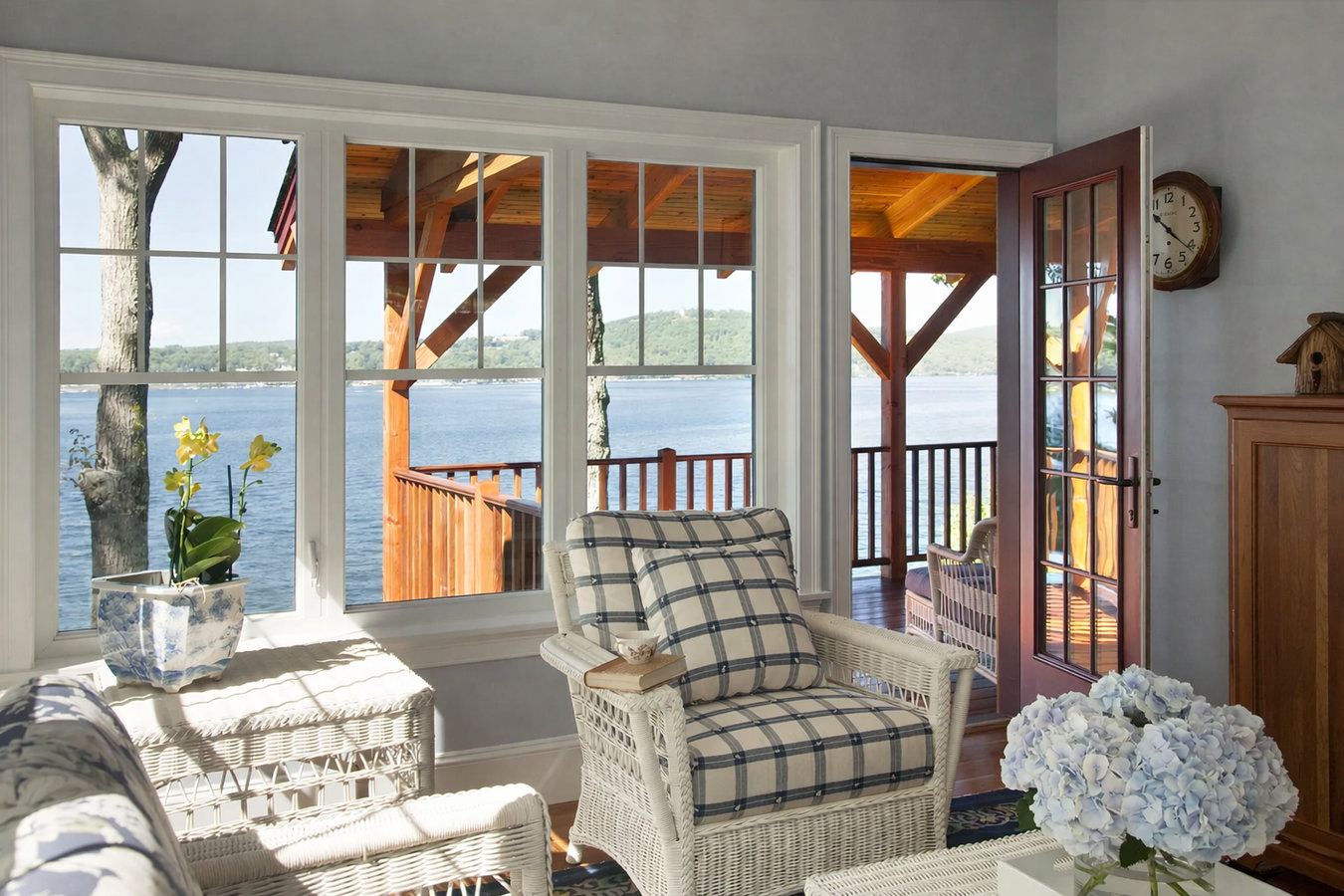
Vinyl sunrooms in Upland, CA use a frame made from durable vinyl - the same material used in quality windows and siding - that resists the heat, UV exposure, and dry conditions of the Inland Empire without cracking, fading, or requiring repaint. Most installations take three to seven days of active construction, with the full process from first call to completed, inspected room typically running six to ten weeks once permits are factored in.
What homeowners value most about vinyl is that it requires almost no ongoing maintenance. There is nothing to repaint, no metal to rust, and no wood to rot or warp in seasonal humidity swings. The material does expand and contract slightly with Upland's temperature changes, but quality installation includes flexible seals designed to handle that movement without cracking or losing their seal. In a climate where summer temperatures push above 100 degrees and Santa Ana winds drive dust through every gap, those tight seals matter.
If you are still in the early stages of deciding what kind of room to build, our sunroom additions page gives a broader overview of how room additions work in Upland. If you are comparing vinyl against a more open option for seasonal use, our three season sunrooms page covers what that lighter build includes and where it fits.
If you retreat back inside within five minutes of stepping onto your patio in July, you are losing months of outdoor living every year. A vinyl sunroom with double-pane heat-reflective glass and ventilation gives you a shaded, protected space that stays comfortable even when it is 100 degrees outside. In Upland, where summer heat is both intense and prolonged, this is one of the most common motivators homeowners give us when they call.
If you have an alumawood cover or lattice structure that is open on the sides, you already have the basic footprint of a sunroom - you are just missing the enclosure. Converting an existing covered patio into a vinyl sunroom is often more affordable than building from scratch, and the result is a fully enclosed, weatherproof room rather than a space that still lets in wind, bugs, and dust. This is one of the most common starting points for Upland homeowners.
If every fall wind event leaves your patio furniture upended and your outdoor surfaces coated in dust, an enclosed sunroom solves that problem permanently. Everything inside stays protected regardless of conditions outside. Upland's position in the Inland Empire makes it especially exposed to these seasonal wind events, and homeowners who have dealt with them year after year often cite this as the reason they finally made the call.
Many Upland homeowners want a bright, comfortable space that is connected to the house and feels like a real room - not a converted garage or a drafty screen porch. A vinyl sunroom delivers that at a lower cost than a full structural addition, and the framing material does not rust, rot, or need repainting over time. If you have been looking for a reading room, a plant space, or a casual sitting area that gets natural light, a vinyl sunroom is worth a serious look.
Every vinyl sunroom project we take on in Upland starts with an honest assessment of the existing site - slab condition, the connection point to your roofline, and how the orientation of the space will affect comfort in summer. We handle the permit application to the City of Upland and coordinate all required inspections, so you never have to contact the building department yourself. If your neighborhood is governed by an HOA, we prepare the submission materials for the architectural review committee - a step that trips up many projects when it is left to the homeowner to figure out. For homeowners who want to think through the full design before committing to a framing material, our sunroom additions page explains the broader planning process.
The glazing choice is one of the most consequential decisions on any Upland vinyl sunroom project. Single-pane glass or basic polycarbonate panels will leave the room unusable in summer. We specify double-pane panels with a low-emissivity coating that blocks solar heat while still letting in light - the same technology the EPA's Energy Star program certifies for energy-efficient residential windows. For homeowners who want the most design flexibility in how each element is configured, our three season sunrooms page covers the lighter build option if year-round climate control is not a priority.
Designed for mild weather use - spring, fall, and comfortable summer evenings. A lower-cost option for homeowners who do not need active climate control.
Fully insulated with heating and cooling capability. The right choice for Upland homeowners who want to use the space comfortably every day of the year.
Enclosing an existing alumawood or open patio cover into a vinyl sunroom. Often more affordable than starting from scratch and less disruptive to the existing yard.
Double-pane panels with a low-e coating that blocks solar heat while still letting in light. Especially important for south- and west-facing orientations common in Upland.
Upland sits at the base of the San Gabriel Mountains in one of the hottest parts of Southern California. Summer temperatures in the Inland Empire regularly exceed 100 degrees, and the city experiences seasonal Santa Ana wind events in fall and winter that gust above 50 mph. A vinyl sunroom that is not properly sealed at the roof-to-wall connection and fitted with heat-reflective glass will fail both tests - it will be too hot to use in summer and will leak dust and air during wind events. The National Weather Service documents these wind patterns across the Inland Empire, and any contractor who builds additions in Upland regularly should already know to design for them.
Most Upland homes were built between the 1950s and 1990s, and many already have concrete slab patios along the rear of the house - which is an advantage when it comes to vinyl sunroom installation, since a sound existing slab reduces site preparation costs. Homeowners in nearby communities like Ontario and Fontana face the same climate conditions, and we serve both. Older slabs in any of these areas may show cracking from the region's expansive clay soils, so we inspect the concrete before anchoring any framing to it - a step that catches problems before they become structural issues.
When you reach out, we ask a few basic questions - room size, whether you have an existing slab, and whether your neighborhood has an HOA. This lets us show up to the estimate prepared. We respond within one business day.
We visit your home, measure the space, check the existing structure and slab condition, and walk through your options. The visit takes 45 minutes to an hour and ends with a clear written proposal - not a vague ballpark.
Once you sign a contract, we submit the permit application to the City of Upland's Building and Safety Division. If you are in an HOA, we help prepare the architectural review materials. This phase typically takes two to four weeks - we handle the tracking so you do not have to contact the city yourself.
Site preparation and concrete work come first if needed, then framing, panel installation, and sealing. Most standard rooms are complete in three to seven days of active construction. The city inspector visits for final sign-off, and we walk you through the finished room and hand over all warranty documents.
Free on-site estimate. Written proposal. No obligation to move forward.
(909) 755-8782Our license is active and publicly verifiable on the California Contractors State License Board website. A valid CSLB license means we have passed state requirements, carry the required insurance, and can be held accountable through a state-regulated process.
Verify on CSLBWe submit the permit application, coordinate the required inspections, and hand you the final sign-off documentation at project completion. Your addition is fully documented - which protects your homeowner's insurance coverage and prevents complications during a future home sale.
We specify double-pane heat-reflective glass panels matched to Upland's climate - not defaults calibrated for a milder coastal city. A vinyl sunroom that cannot handle a 100-degree July afternoon is not a useful room for an Upland homeowner.
Many Upland neighborhoods - particularly those built in the 1980s and 1990s in north and northeast Upland - are governed by HOAs with exterior addition requirements. We know what local architectural review committees typically need and help you prepare a complete submission the first time.
Those credentials translate directly to a simpler experience for you - no surprises at the permit office, no calls from your HOA, and a room that holds up through its first Inland Empire summer and its first Santa Ana wind season.
Full overview of how sunroom additions work in Upland - planning, permitting, and what to expect from start to finish.
Learn MoreA lighter build option for homeowners who want seasonal use without the cost of full year-round climate control.
Learn MorePermit slots fill up - locking in your start date now means you could be in your new room before the next summer heat season arrives.